Healthy eyes.
It is important to see an ophthalmologist every five years — from the age of 45, we recommend an examination every two years, as eye conditions become more common with age. Children should be examined by the age of four so that a lazy eye (amblyopia) can be detected in good time.
“You feel at ease straight away and in very good hands.”
Sandra · Google review (translated)
“The eyes are our window to the world — the prerequisite for an active life.”
Our areas of focus.
Five topics we keep a particularly close eye on — choose the one that concerns you.
Dry eye
What is it?
The tear film is the protective layer on the surface of the eye. With dry eye, it is altered or unstable — either too few tears are produced, or they evaporate too quickly because the oily protective layer from the glands along the eyelid margin is missing. This can cause considerable discomfort in everyday life — treatment is possible.
Early detection pays off
Left untreated, dry eye can irritate the surface of the cornea and permanently impair the quality of your vision — the earlier the cause is found, the simpler the treatment. Before any laser treatment, we always examine the tear film as well.
What we do at My Laser Vision
At our practice, examining the tear film is part of our Eye Screening: we analyse the quantity and quality of your tears, narrow down the cause and discuss the right treatment — from artificial tears and eyelid margin care to adjusting your screen habits.
Book an examination (opens in a new tab)How you may notice it
- Burning, itching or a gritty feeling
- Red, tired eyes — especially when working at a screen
- Sensitivity to wind, smoke and dry air
- Intermittently blurred vision that improves when you blink
- Paradoxically, constantly watering eyes as well
Causes & risk factors
- Long hours of screen work (infrequent blinking)
- Dry air, air conditioning, heating
- Wearing contact lenses for many years
- Hormonal changes and increasing age
- Certain medications
This information is no substitute for a diagnosis — an examination will show what lies behind it in your case.
Cataract
What is it?
With a cataract, the eye’s natural lens becomes cloudy — usually gradually, over years. The lens is made of proteins that change with age and increasingly scatter light instead of focusing it: the world looks as if you were seeing it through frosted glass. A cataract is not a disease in the strict sense, but usually a normal ageing process — and it is readily treatable.
Early detection pays off
A cataract can be operated on at any stage — but the rule is: the denser the clouding, the greater the impact on everyday life. Cataract surgery is one of the most frequently performed procedures in all of medicine.
What we do at My Laser Vision
We make the diagnosis using modern diagnostics, including biometry (precise measurement of the eye for the lens calculation). A cataract is treated by replacing the clouded lens with an artificial lens — with multifocal premium lenses, a large degree of independence from glasses is often possible afterwards, and as a rule a cataract can no longer form on the artificial lens. Find out more about refractive lens exchange.
Book an examination (opens in a new tab)How you may notice it
- Hazy, dull vision, as if through fog
- Increasing sensitivity to glare, e.g. when driving at night
- Colours appear paler and more yellowish
- Your glasses need adjusting more often within a short time
- Double outlines in one eye
Causes & risk factors
- Increasing age (most common cause)
- UV light over many years
- Diabetes mellitus
- Long-term cortisone therapy
- Rarely: injury, or present from birth
This information is no substitute for a diagnosis — an examination will show what lies behind it in your case.
Glaucoma
What is it?
With glaucoma, the optic nerve is progressively damaged — the most common risk factor is raised intraocular pressure, but it can also occur with normal pressure. The insidious part: the damage develops completely unnoticed over years, because the brain compensates for the growing gaps in the visual field for a long time. Once part of the visual field is lost, it does not come back.
Early detection pays off
Because glaucoma stays silent for so long, preventive check-ups are crucial: from 40, regular checks of intraocular pressure and the optic nerve are advisable. Detected early, its progression can usually be kept well in check with eye drops.
What we do at My Laser Vision
At our practice, measuring intraocular pressure is part of the basic examination, and in-depth glaucoma diagnostics are part of our Eye Screening: nerve fibre measurement, assessment of the optic nerve and comparison over time using digital documentation — so we detect changes before you notice them.
Book an examination (opens in a new tab)How you may notice it
- No symptoms at all at first — that is what makes it dangerous
- Gradual loss at the edge of the visual field
- Only at a late stage: stumbling, failing to see obstacles
- Rarely (acute attack): severe pain, red eye, loss of vision — an emergency!
Causes & risk factors
- Raised intraocular pressure
- Increasing age (considerably more common from 60)
- Glaucoma in the family
- Severe short-sightedness (myopia)
- Diabetes and circulatory disorders
This information is no substitute for a diagnosis — an examination will show what lies behind it in your case.
Macular degeneration
What is it?
The macula is the tiny area of the retina you use to see sharply — when reading, driving and recognising faces. In age-related macular degeneration (AMD), metabolic waste products are deposited beneath the retina and the centre of vision changes: central vision deteriorates, while peripheral vision is preserved. A distinction is made between a slowly progressing dry form and a faster-progressing wet form.
Early detection pays off
The wet form of AMD in particular can be treated today — but time matters: the earlier it is detected, the more vision can usually be preserved. A simple self-test is the Amsler grid: if the lines look distorted, this should be checked promptly.
What we do at My Laser Vision
With macular and nerve fibre measurement and digital photo documentation, we keep an eye on your centre of vision and detect changes over time — especially important from middle age onwards and if there is a family history.
Book an examination (opens in a new tab)How you may notice it
- Straight lines look bent or distorted (e.g. window frames, tile joints)
- A grey or blurred spot in the centre of your vision
- Reading and recognising faces become more difficult
- Colours appear paler
- The outer visual field is preserved
Causes & risk factors
- Increasing age (usually from 60)
- AMD in the family
- Smoking — the most important risk factor you can influence
- High blood pressure and cardiovascular disease
- Intense UV exposure
This information is no substitute for a diagnosis — an examination will show what lies behind it in your case.
Diabetes mellitus
What is it?
Persistently high blood sugar damages the finest blood vessels in the body — and nowhere are they as easy to see as on the retina. In diabetic retinopathy, these vessels become leaky or blocked; left untreated, bleeding and swelling can seriously threaten your sight. In industrialised countries, it is one of the most common causes of blindness among people of working age — and in many cases it is preventable.
Early detection pays off
People with diabetes should have their retina checked regularly — as a rule at least once a year, even without any symptoms. Detected early, retinopathy can usually be treated well and vision preserved.
What we do at My Laser Vision
We check your retina regularly, record the findings with digital photo documentation and compare them over time — so even small changes are noticed early, and your diabetes team can receive a clear report on request.
Book an examination (opens in a new tab)How you may notice it
- Often no symptoms at all at first
- Later, sharpness of vision that fluctuates with blood sugar levels
- Dark spots, streaks or a “shower of soot” in your field of vision
- Distorted or blurred vision if the macula is involved
Causes & risk factors
- Duration and management of the diabetes (type 1 and type 2)
- High blood pressure
- High blood lipids
- Smoking
This information is no substitute for a diagnosis — an examination will show what lies behind it in your case.
Examinations at our practice.
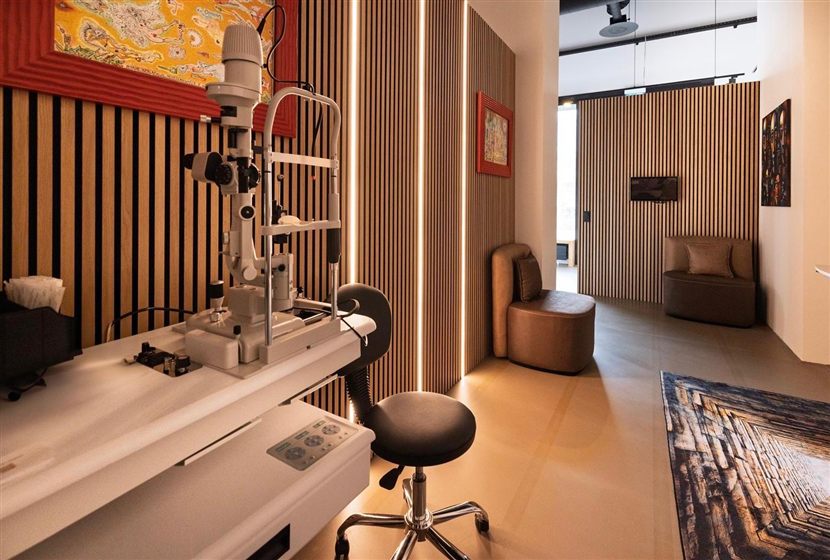
Basic examinations
Basic ophthalmic care — for children and adults.
- Children’s check-up
- Visual acuity (visus) and refractive error (dioptres)
- Intraocular pressure measurement
- Anterior segment of the eye
- Posterior segment of the eye
- Squint diagnostics (strabismus, phorias)
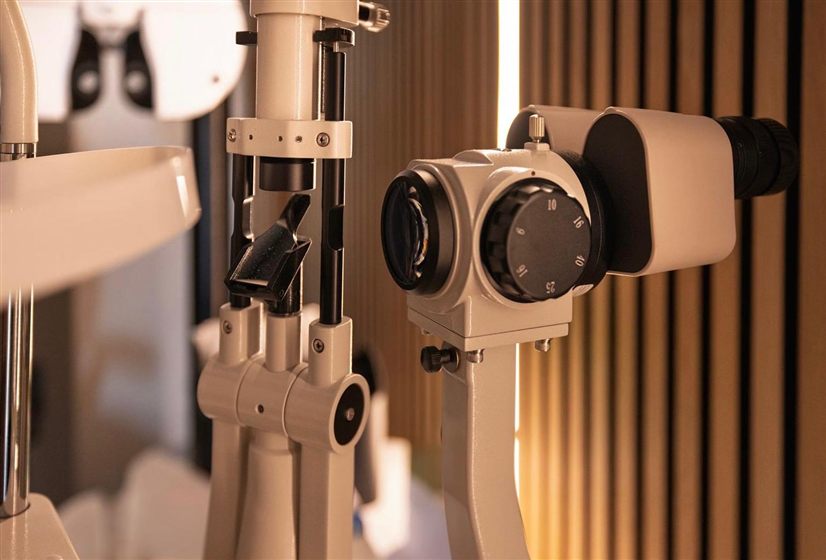
Eye Screening
In-depth diagnostics and complete eye measurement.
- Driving licence eye test
- Digital photo documentation
- Eye test for screen work
- Tear film examination
- Complete eye measurement:
- Macular & nerve fibre measurement
- Corneal topography
- Endothelial cell count
- Glaucoma diagnostics
- Biometry